
Wet vs dry season in Bohol
Bohol does not have one magic month. PAGASA divides the Philippine year into a rainy season from June to November and a dry season from December to May, with the dry months split again into a cooler period from December to February and a hotter one from March to May. That is a useful planning frame, but the more practical question is what kind of Bohol trip you want: Panglao beaches and a Balicasag boat day, or inland driving through the Chocolate Hills, Loboc and out toward Anda.
Start with the two broad seasons, not with a promise of perfect weather
PAGASA describes the Philippines as tropical and maritime, with the rainy season running from June to November and the dry season from December to May. The dry season then splits again into the cooler dry months from December to February and the hotter dry months from March to May. That gives you a useful planning frame, but not a guarantee of cloud-free days: Bohol is still humid and tropical all year, so the right trip plan matters more than chasing a supposedly perfect week.
- Use the national season split as the starting point, not as a promise that every June day is wet or every April day is blue-sky.
- The cooler dry months suit travellers who want easier sightseeing days without the March-to-May heat.
- The hotter dry months are the period when beach time and sea days feel most like the classic postcard version of Bohol.
Choose the drier season when Panglao and Balicasag are the headline
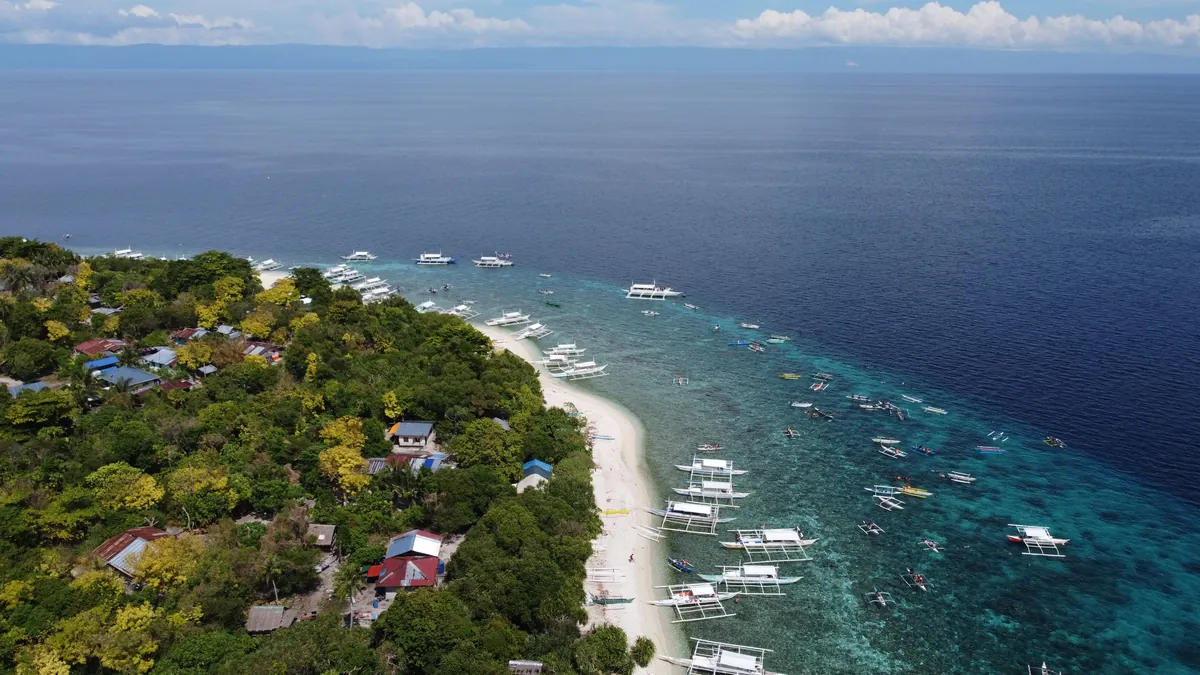
If this is a first Bohol trip built around Panglao, Alona Beach and one island-hopping day, lean toward the drier part of the year. Panglao is the island's main beach base, and Balicasag is reached by boat from the Panglao side, so the trip quality depends more on sea conditions than an inland day does. Bohol tourism itself recommends leaving Panglao early in the morning and returning before the afternoon tide builds, which tells you exactly why a sea-first itinerary benefits from cooperative weather.
- A beach-and-snorkel trip is simplest when the boat day has the best chance of running smoothly.
- Put Balicasag near the front of the stay rather than on the final possible day, so the rest of the plan can flex around it if needed.
- If you are landing by flight or ferry and heading straight to Panglao, ask for the arrival transfer and the boat-day pickup as one joined plan.
Do not write off the wetter months if inland Bohol is the point
The classic countryside loop is a road day, not a boat day. The Chocolate Hills, Loboc and Corella sit in Bohol's inland geopark belt, and Anda's appeal on the east coast is split between its beach and its spring-fed cave pools. That means a wetter-season trip can still be a good Bohol trip when the centre of gravity is inland scenery, cultural stops or a longer private drive rather than one tide-sensitive island-hopping morning.
- The countryside loop is less tide-sensitive than Balicasag because it is built around road stops rather than a single boat departure window.
- The hills are named for the brown grass of the drier stretch; after heavier rain the same landscape is greener, but still the same signature inland day.
- Anda gives you two workable shapes in one area: beach time when the weather is kind, and cave-pool plus driving days when you want to stay land-based.
For mixed trips, build around one weather-sensitive day and one reliable road day
Most visitors are not choosing between a pure beach trip and a pure inland trip; they want both. The easiest answer is not to obsess over a single "best month", but to structure the stay around two anchors: one day that depends on the sea, and one day that works well on the road. That keeps the trip balanced even when the weather does what tropical weather does.
- Pair one Panglao or Balicasag sea day with one Chocolate Hills-Loboc or Anda road day instead of trying to make every day sea-dependent.
- Keep arrival and departure days light rather than forcing the boat day against a flight or a ferry crossing.
- If the boat leg is your must-do, say so in the quote form and we will shape the rest of the road plan around protecting that day.
How to ask for the right seasonal quote
The best enquiry tells us what kind of Bohol trip you are actually trying to protect from the weather. "Dry season or wet season?" is too broad on its own. "We care most about Balicasag" or "we want the countryside and one quiet east-coast day" is what makes the quote useful on the first reply.
- Tell us whether the trip is beach-first, countryside-first or east-coast-first.
- Include the hotel area, arrival method and date, and whether the trip starts on Panglao, at the airport or at the ferry port.
- If Balicasag is non-negotiable, say that; if you want an inland backup day, say that too so the quote covers the right shape of trip.
Questions we get asked about this
The things people check before they send a quote request. If yours is not here, put it in the message box and we will answer it with your price.
When is the wet season in Bohol?
PAGASA divides the Philippine year into a rainy season from June to November and a dry season from December to May, and splits the dry months again into a cooler period from December to February and a hotter one from March to May. Treat that as a planning frame rather than a promise: Bohol is humid and tropical all year, so no month guarantees cloud-free days.
Is there a single best month to visit?
No, and chasing one is the wrong question. What matters more is the kind of Bohol trip you want. If the headline is Panglao, Alona Beach and an island-hopping day, lean toward the drier part of the year, because a sea-first trip depends on conditions far more than an inland day does. If the point is the countryside, a wetter month is much less of a problem.
Is a wet-season trip still worth it?
Yes, when inland Bohol is the centre of gravity. The classic countryside loop is a road day built around road stops, not a single tide-sensitive boat departure window, so it is far less weather-exposed than Balicasag. The hills are named for the brown grass of the drier stretch — after heavier rain the same landscape is simply greener, and it is still the same signature inland day. Anda works the same way: beach time when the weather is kind, cave pools and driving when you would rather stay land-based.
How should I plan when the weather could go either way?
Build the stay around two anchors instead of making every day sea-dependent: one day that needs the sea, and one that works fine on the road. Put the boat day near the front of the trip rather than on the last possible morning, and keep arrival and departure days light rather than forcing a boat against a flight or a ferry crossing. If the boat leg is your must-do, say so in the quote form and we will shape the road plan around protecting it.
Keep planning
Turn this into a fixed quote
Tell us your dates, where you are staying and which of these days you want. We will reply by email with one fixed, all-in price for the vehicle and driver.
Sources
The facts in this guide are checked against these public sources.