
Blood Compact Shrine
The Blood Compact Shrine — the Sandugo — is the first thing most countryside tours stop at, and the one stop people ask for by name without knowing where it is. It stands at Barangay Bool on the southern edge of Tagbilaran City, on the same coastal road that carries on to Baclayon, Loboc and the Chocolate Hills. That position is the practical point: it is a ten-minute pause at the start of the day rather than a detour, so it costs a countryside itinerary almost nothing to include — and it is genuinely awkward to add later, once the day has turned inland.
Good to know
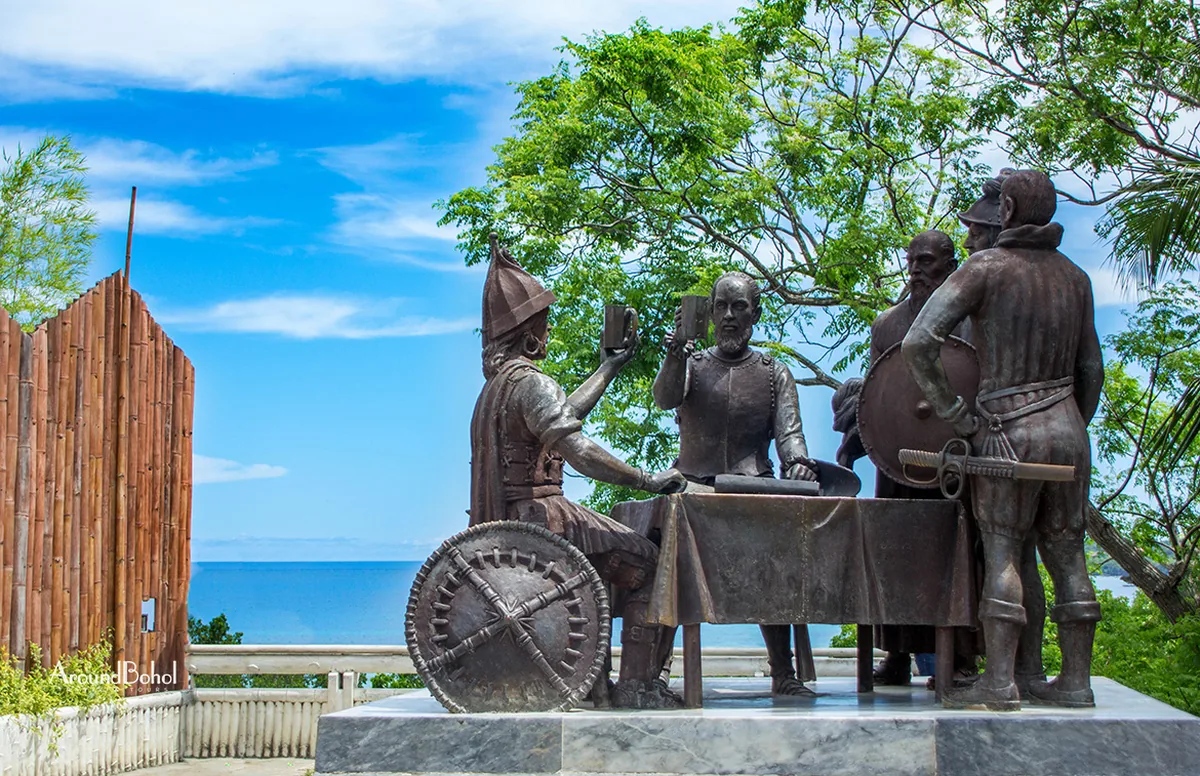
- The shrine marks the Sandugo — the blood compact performed between the Spanish explorer Miguel López de Legazpi and Datu Sikatuna, chieftain of Bohol, on 16 March 1565. Sandugo is a Visayan word meaning "one blood".
- It is remembered as the first treaty of friendship between Spaniards and Filipinos, and the scene appears on both the provincial flag and seal of Bohol and on the official seal of Tagbilaran.
- The monument is a life-size bronze group by Napoleon Abueva — the Boholano sculptor proclaimed National Artist for Sculpture in 1976 and known as the "Father of Modern Philippine Sculpture".
- Republic Act No. 9093, approved on 8 April 2001, names the compact as having taken place "on March 16, 1565 in Barangay Bool, City of Tagbilaran" and declares 16 March of every year Blood Compact Day, a special working public holiday in Tagbilaran City and across Bohol.
- The site is on the coast: the bronzes look out over the Bohol Sea from the roadside above the water, which is why it photographs well early, before the light hardens.
What we quote for
- The shrine as the opening stop on a full countryside day, before Baclayon, Corella, Loboc and the Chocolate Hills
- A short heritage pairing — the shrine and Baclayon Church together — for visitors who do not want a whole inland day
- A pause here on an airport or pier transfer heading east, with the vehicle waiting while you walk down to the bronzes
We do not publish a price list. Every trip is priced on its own — the vehicle, the stops, the timing — and the number we send you is the number you pay.
Planning notes
- It sits at Bool on the southern edge of Tagbilaran, so it comes BEFORE Baclayon on the road east — not after it. Ask for it when you list your stops and it costs the day a short pause; ask once you are already inland and it means doubling back.
- It is a roadside monument rather than a ticketed attraction: a viewing terrace, the bronzes and the sea. Most visitors are done in ten to fifteen minutes, which is why it pairs so naturally with a longer stop rather than standing alone.
- Where the compact actually happened is an open historical question, and the site itself has been changing. The National Historical Institute delisted the Bool site in 2005 because the true location "remains to be resolved"; the Wikipedia article on Loay reports research placing it at barangay Hinawanan in that municipality, while the Sandugo article names Villalimpia in Loay as the authentic site now being developed. We quote the drive, not the verdict — but it is worth knowing the story is live rather than settled.
- The monument itself has moved within Bool: GMA Regional TV reported in March 2024 that the Abueva bronzes were relocated to the Tagbilaran City Friendship Park, which OpenStreetMap places in Bool. Tell us in the enquiry that the shrine is on your list and your driver will take you to where it currently stands.
Blood Compact Shrine: questions we get asked
The things people ask before they send a quote request. If yours is not here, put it in the message box and we will answer it with your price.
What is the Blood Compact Shrine?
It is the monument to the Sandugo — the blood compact sealed between Miguel López de Legazpi and Datu Sikatuna on 16 March 1565, remembered as the first treaty of friendship between Spaniards and Filipinos. The word is Visayan for "one blood". The sculpture is a life-size bronze group by Napoleon Abueva, the Boholano National Artist for Sculpture, and it stands on the coast at Barangay Bool on the southern edge of Tagbilaran City.
Where is it, and does it fit a countryside tour?
It fits easily, and it fits at the START. The shrine is at Bool, on the southern edge of Tagbilaran, on the same south-coast road that carries on to Baclayon, Loboc and the Chocolate Hills — so it comes before Baclayon, not after it. On a countryside day leaving Panglao or Tagbilaran it is a short pause a few minutes into the drive rather than a detour. Name it in your enquiry and we build the day around it; left out, it is awkward to retrofit once the route has turned inland.
How long do people spend there?
Usually ten to fifteen minutes. It is a roadside monument with a viewing terrace over the Bohol Sea, not a ticketed attraction with a route through it — you look at the bronzes, read the inscription and take the photograph. That short stop is exactly why it works as an opener to a longer day rather than as a trip of its own, and why we normally quote it as part of a countryside loop or a heritage pairing with Baclayon Church.
Is it true the blood compact did not happen there?
The location is genuinely disputed, and the dispute is official rather than folklore. Republic Act No. 9093 of 2001 names Barangay Bool as the site. The National Historical Institute then delisted the Bool site in 2005 on the grounds that the actual location "remains to be resolved", and the research since points to the municipality of Loay east along the coast — Wikipedia’s article on Loay names barangay Hinawanan, while its Sandugo article names Villalimpia in the same municipality as the authentic site now being developed. So: the monument you visit is at Bool, the history is contested, and we make no claim either way. We quote the transport.
Was the monument moved?
Within Bool, yes. GMA Regional TV reported in March 2024, at the 459th Blood Compact commemoration, that the life-size Sandugo monument by Napoleon Abueva "was moved to the Tagbilaran City Friendship Park" — which OpenStreetMap locates in Bool, on the same stretch of coast. It did not leave the tour route. Flag the shrine as a stop when you enquire and your driver will take you to where the bronzes currently stand rather than to a map pin that may be out of date.
When is Blood Compact Day?
16 March. Republic Act No. 9093, approved on 8 April 2001, declares it a special working public holiday each year in Tagbilaran City and throughout Bohol, and it runs alongside the Sandugo Festival that the province marks in the city. If you are visiting in mid-March, say so in your enquiry — commemorations and street events change how the roads around Tagbilaran move on the day, and that is the kind of thing worth planning a transfer around rather than discovering on the morning.
Sources
Facts on this page are checked against public sources, listed here so you can check them too. Anything we cannot verify, we do not print.